
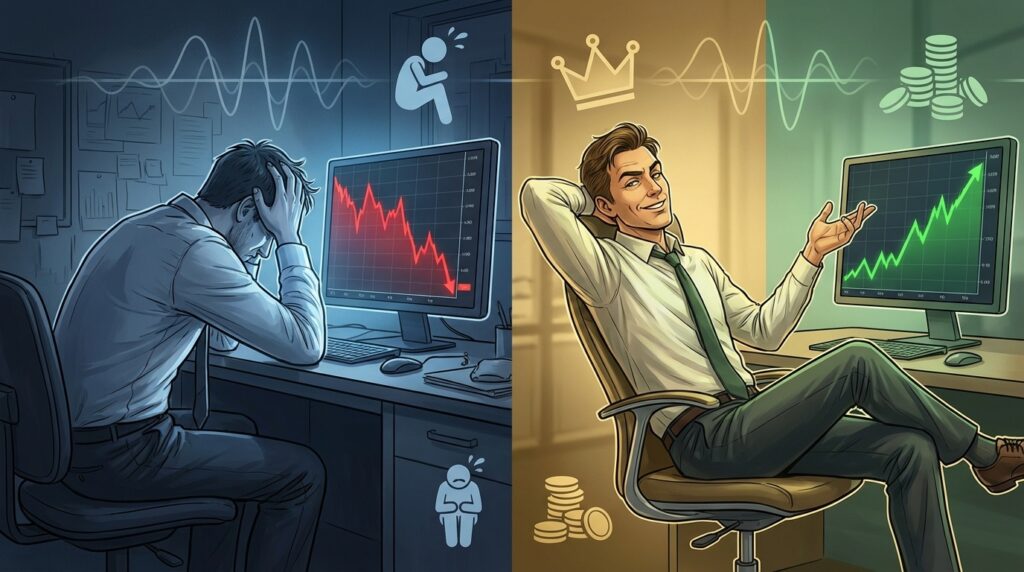
Emotion control in trading is more important than strategy. Many traders search for the perfect indicator or setup, but ignore the real problem — emotional instability. Fear, greed, frustration, and overconfidence destroy more accounts than bad strategies.
The truth is simple: trading is 70% psychology and 30% strategy. If you cannot control emotions, no strategy will save you. This article explains practical and realistic techniques to improve emotion control in trading.

Why Emotion Control in Trading Is Difficult
Before learning solutions, you must understand the problem.
Trading triggers strong emotions because:
- Real money is involved
- Outcomes are uncertain
- Losses feel personal
- Market moves fast
The brain reacts to financial loss like physical danger. That is why emotional reactions are automatic.
You cannot remove emotions. You can only manage them.
Common Emotions That Affect Traders
Understanding these emotions helps control them.
1. Fear
- Fear of losing money
- Fear of missing out (FOMO)
- Fear of being wrong
Fear leads to:
- Early exits
- Avoiding valid trades
- Hesitation
2. Greed
- Holding trades too long
- Increasing position size
- Ignoring target
Greed destroys discipline.
3. Revenge
- Trading immediately after loss
- Doubling position size
- Ignoring stop loss
Revenge trading damages accounts quickly.
Practical Ways to Control Emotions in Trading
Now let’s discuss realistic, practical methods — not theory.
1. Use Fixed Risk Per Trade (Most Powerful Method)
Emotion control becomes easier when risk is small.
Rule:
- Risk only 1–2% of total capital per trade
Why it works:
- Loss feels manageable
- Panic reduces
- Emotional reaction becomes smaller
Large risk = large emotional reaction.
Small risk = stable mindset.
2. Define Stop Loss Before Entry
Never enter a trade without knowing:
- Where you will exit if wrong
Predefined stop loss:
- Removes emotional exit
- Prevents hesitation
- Protects capital
Stop loss reduces emotional damage.
3. Set Daily Loss Limit
Example:
- Maximum 2–3 losing trades
- Or 3% daily capital loss
After hitting limit:
- Stop trading immediately
This prevents revenge trading and emotional spirals.

4. Trade Less, Not More
Overtrading increases emotional stress.
Many beginners think:
- More trades = more profit
Reality:
- More trades = more mistakes
Focus on quality setups only.
5. Create a Written Trading Plan
A trading plan includes:
- Entry criteria
- Stop loss rules
- Risk–reward ratio
- Position size
- Daily limits
When rules are written:
- Emotional decisions reduce
- Consistency increases
Trading without a plan increases emotional chaos.
6. Take Breaks After Big Wins or Losses
Both wins and losses create emotional spikes.
After:
- Big profit → avoid overconfidence
- Big loss → avoid revenge
Step away from screen for 20–30 minutes.
Distance resets emotional balance.
7. Maintain a Trading Journal
Write down:
- Why you entered
- How you felt
- Whether you followed rules
Review weekly:
- Emotional patterns
- Common mistakes
Self-awareness improves emotion control in trading.
8. Accept Losses as Business Cost
This is the hardest but most important step.
Professional traders understand:
- Loss is part of probability
- No strategy wins 100%
- Losing streaks happen
When you accept loss calmly, emotional reaction reduces automatically.
9. Avoid Watching P&L Continuously
Constantly checking profit and loss:
- Increases anxiety
- Creates panic
- Triggers early exit
Focus on chart structure, not money movement.
10. Focus on Process, Not Profit
Beginners focus on:
- “How much I made”
Professionals focus on:
- “Did I follow my rules?”
If process is correct, profit follows long-term.
Long-Term Emotion Control Strategy
Emotion control is not achieved in one week.
It improves by:
- Consistent risk management
- Repetition
- Self-review
- Experience
Over time:
- Emotional reactions reduce
- Confidence becomes stable
- Decisions become logical
Reality Check for Beginners
Emotion control in trading does not mean:
- No fear
- No stress
- No frustration
It means:
- Acting according to rules despite emotions
Discipline is stronger than emotion.
Final Conclusion
Emotion control in trading is a skill built through discipline, risk management, and self-awareness. You cannot remove emotions, but you can reduce their impact.
Practical steps like fixed risk, stop loss, daily limits, and journaling create emotional stability. Focus on survival first. Profit comes later.
Trading success belongs to those who control themselves, not those who predict markets.