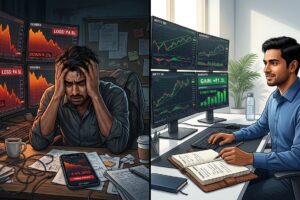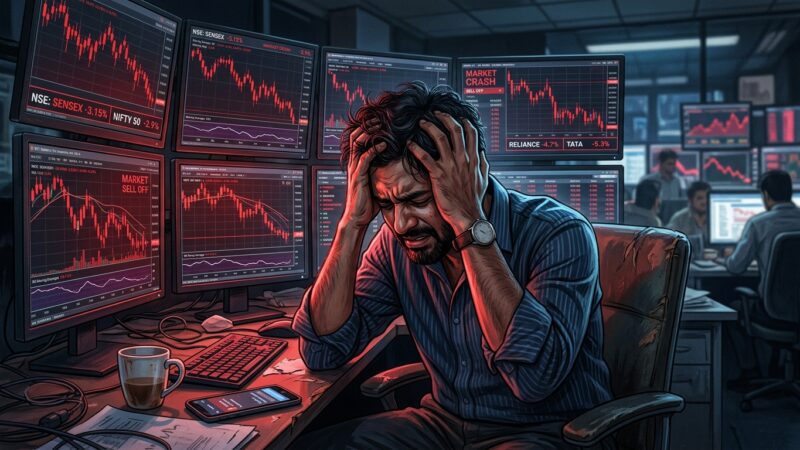
Most traders do not lose money because of bad strategies. They lose money because they trade too much. This problem has a name — overtrading syndrome — and it is one of the most silent account killers in the trading world.
If you have ever sat in front of your screen and taken trade after trade, even when there was no clear setup, you already know what overtrading feels like. The screen pulls you in. The charts move. Something inside you says — “just one more trade.” And before you realize it, your day’s profits are gone or your losses have doubled.
This article explains exactly what overtrading syndrome is, why it happens, and most importantly — how to stop it permanently.
What Is Overtrading Syndrome?
Overtrading syndrome is a behavioral pattern where a trader takes far more trades than their strategy requires. It is not just about the number of trades — it is about the compulsive, unplanned, emotionally driven need to always be in the market.
A trader with overtrading syndrome cannot sit still. Every candle looks like an opportunity. Every small move feels like something to catch. The idea of doing nothing — of waiting — feels unbearable.
This syndrome is dangerous not just because of direct financial losses. It also destroys discipline, ruins good trading habits, and creates a cycle of frustration that becomes very hard to break.
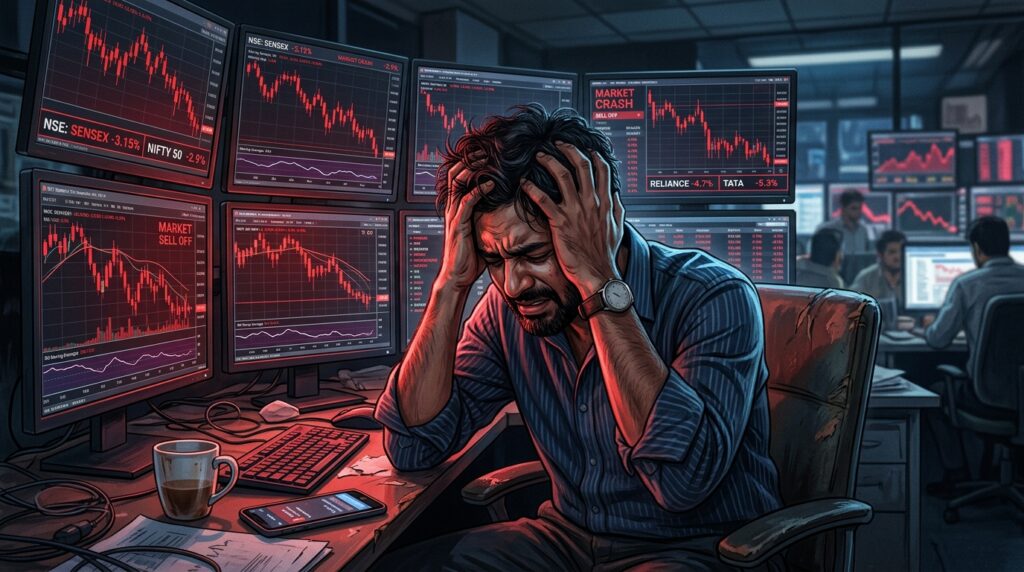
Why Do Traders Overtrade? The Real Psychology Behind It
Understanding why overtrading happens is the first step to fixing it. There is no single reason — overtrading syndrome is usually driven by a combination of psychological triggers.
1. Boredom and the Need to Feel Active
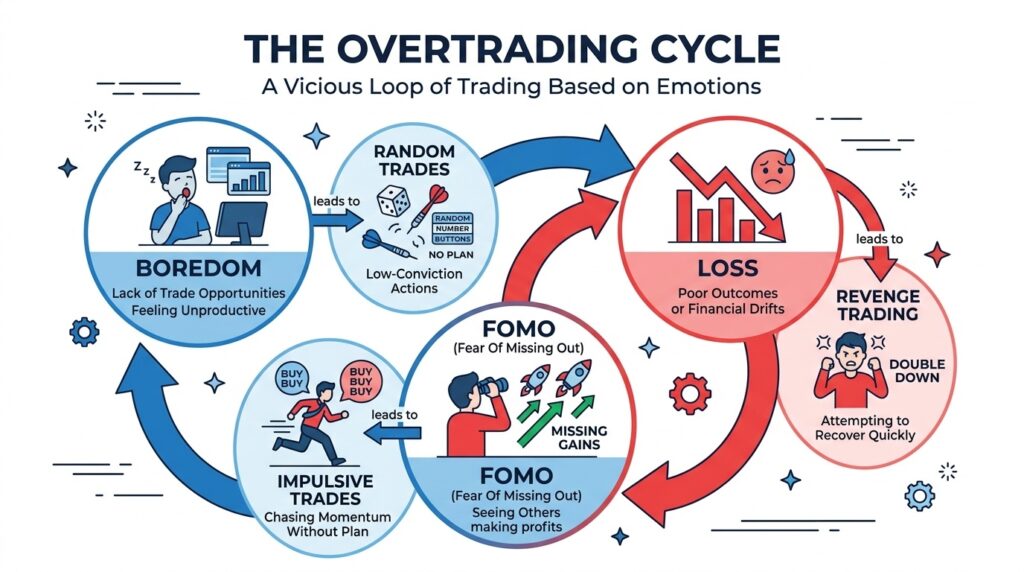
Many traders — especially beginners — feel that if they are not in a trade, they are wasting time. The market is open, the charts are moving, and sitting on the sidelines feels unproductive.
This mindset is completely wrong. Professional traders understand that waiting is part of the job. The best trades come to you. You do not chase them.
But for someone trapped in overtrading syndrome, boredom triggers action. They enter trades just to feel involved — not because the setup is there.
2. Revenge Trading After a Loss
This is one of the most common triggers. A trader takes a loss, feels angry or embarrassed, and immediately jumps back into the market to “win it back.” The emotional brain takes over, and the logical brain shuts down.
Revenge trading is overtrading in its most dangerous form. You are not trading a setup — you are trading your emotions. And emotions almost always lose against the market.
3. Fear of Missing Out (FOMO)
FOMO is a powerful psychological force. When a trader sees a stock moving fast or hears about a big trade someone else made, the fear of missing the next big move pushes them into impulsive trades.
FOMO-driven trades rarely have proper entry logic, stop loss placement, or risk management. They are pure emotional reactions — and they destroy accounts slowly.
4. Addiction to Market Stimulation
Trading — especially intraday trading — can be genuinely addictive. The charts, the price movements, the instant feedback of profit or loss — all of it triggers dopamine in the brain. Just like gambling.
Some traders unknowingly develop a dependency on this stimulation. They do not trade to make money anymore. They trade because the process itself gives them a rush. This is one of the most serious forms of overtrading syndrome and can require deep behavioral work to overcome.
5. Trying to Hit a Daily Target
Many traders set a daily profit target and then fall into a trap. If they hit the target early, they think — “why stop now, I can make more.” If they are below target, they think — “I need to make up the difference before the day ends.”
Both mindsets lead to more trades than the strategy calls for. Both are forms of overtrading.
How Overtrading Destroys Your Account — Even If Individual Trades Are Good
Here is something that surprises many beginners. A trader can have a 60% win rate strategy and still lose money — simply because of overtrading.
How? When you overtrade:
- Brokerage and transaction costs multiply. Every extra trade adds cost. Over 20-30 unnecessary trades per day, this becomes significant.
- You take trades with no edge. Not every market hour has high-probability setups. Forcing trades in low-quality market conditions means you are gambling, not trading.
- Emotional fatigue sets in. After many trades, your decision-making quality drops. Late-day trades are often the worst because mental sharpness is gone.
- Risk management breaks down. When you are in multiple trades at once, tracking stop losses, managing positions, and making clear decisions becomes impossible.
The result is that a trader with a genuinely good strategy underperforms — or even blows their account — purely because of trade frequency.
Signs You Are Suffering From Overtrading Syndrome
Before you can fix a problem, you need to acknowledge it. Here are the clear warning signs:
- You take trades even when your setup criteria are not fully met
- You feel restless or anxious when you are not in a trade
- You frequently average down on losing positions just to stay active
- You keep trading after hitting your daily loss limit
- Your number of trades per day is consistently higher than what your strategy requires
- You feel a “rush” when entering trades, regardless of setup quality
- After a losing streak, your trade size increases instead of decreases
- You review your trades at night and cannot explain why you took half of them
If you recognize yourself in three or more of these points, overtrading syndrome is already affecting your trading performance.
How to Stop Overtrading — Proven Methods That Actually Work
1. Define Your Trading Plan With a Maximum Trade Limit
The single most effective tool against overtrading is a rule-based trading plan with a hard cap on daily trades.
Decide before the market opens: “I will take a maximum of 3 trades today.” Once you hit that number — stop. No exceptions.
This forces you to be selective. When you know you only have 3 bullets, you stop firing at every shadow.
2. Only Trade Your Pre-Defined Setup
Write down your exact entry criteria. Every. Single. Condition that must be met before you enter a trade.
For example: “I will only enter a trade when price breaks a key resistance level, volume is above average, and the overall market trend is in my direction.”
If all three conditions are not met — you do not trade. Period. This removes all impulsive, boredom-driven, and FOMO-based entries.
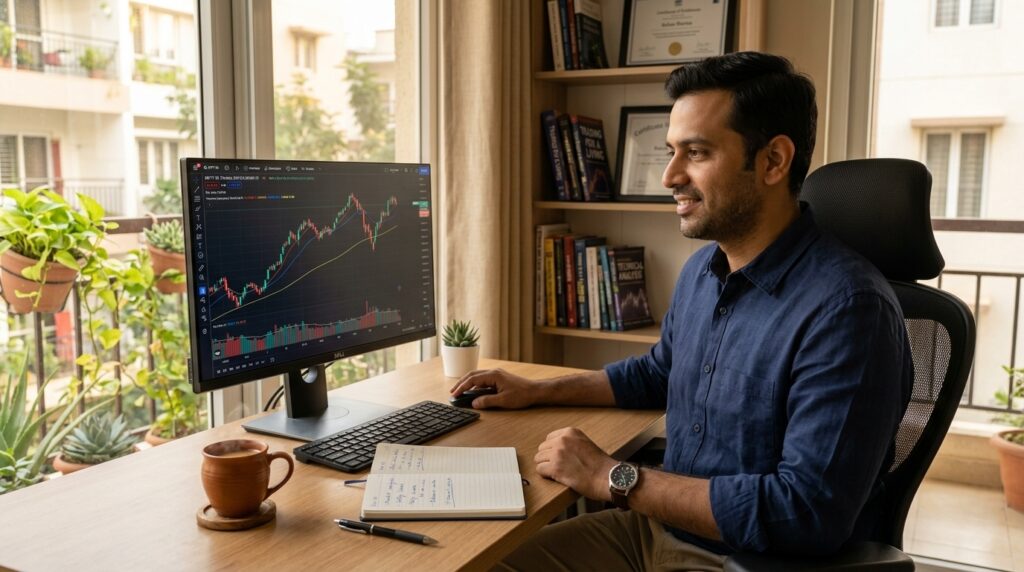
3. Maintain a Trading Journal
A trading journal forces accountability. When you have to write down the reason for every trade, you quickly realize that many of your trades have no logical reason at all.
Seeing your overtrading pattern in black and white — the entry reasons, the results, the emotional state — is one of the fastest ways to break the habit. What gets measured gets improved.
4. Set a Daily Loss Limit and Walk Away
Decide the maximum amount you are willing to lose in a single day. Once that level is hit — close the platform and step away. No negotiation.
This rule alone saves accounts. Most of the worst trading days in history — personal and professional — happen because someone crossed their daily loss limit and kept going trying to recover.
5. Take Scheduled Breaks During the Day
Professional traders do not watch charts for 6 continuous hours. They take breaks. Set a timer every 90 minutes. Step away from the screen, have water, go for a short walk.
This resets your mental state and prevents the fatigue-driven overtrading that typically happens in the afternoon session.
6. Remove Yourself From High-Stimulation Environments
Trading groups on WhatsApp or Telegram that constantly share tips, alerts, and calls are overtrading fuel. Every message creates urgency. Every tip creates FOMO.
If you are serious about fixing overtrading syndrome, ruthlessly clean your information environment. Trade your own setups — not other people’s noise.
The Mindset Shift That Changes Everything
Here is the core truth that every overtrade-prone trader needs to internalize:
You do not get paid for the number of trades you take. You get paid for the quality of trades you take.
A sniper does not fire a hundred bullets hoping one hits. A sniper waits — sometimes for hours — for the one clean shot.
The best traders in the world are not the most active ones. They are the most patient ones. They sit through noise, ignore mediocre setups, and strike decisively when the probability is genuinely in their favor.
Overtrading syndrome is ultimately a patience problem. And patience is a skill — one that can be developed with the right structure, rules, and self-awareness.
Final Thoughts
Overtrading syndrome is not a character flaw. It is a very common psychological trap that affects beginners and even experienced traders. The market is designed to pull you in — the volatility, the movement, the endless stream of “opportunities.”
But the traders who survive and grow are the ones who recognize this trap and build systems to protect themselves from it.
Start with a trading plan. Add a journal. Set hard daily limits. Clean your environment. And most importantly — learn to do nothing when nothing is the right trade.
That discipline is not weakness. That discipline is the edge.