Most beginners enter trading with only one goal — making profit. Professionals enter the market with a different priority — capital protection. This difference decides who survives and who exits the market.
Understanding a proper capital protection strategy is more important than any indicator, pattern, or strategy. Profit is meaningless if capital is not protected. This article explains, step by step, how traders protect their capital and why capital protection must come before profit.

What Is Capital Protection?
Capital protection means preventing large losses that can damage or wipe out your trading account.
It does NOT mean:
- Avoiding all losses
- Winning every trade
It DOES mean:
- Limiting losses
- Surviving losing streaks
- Staying in the game long-term
Professional traders focus on survival first, profit later.
Why Capital Protection Is More Important Than Profit
Profit comes from consistency. Consistency comes from survival.
If capital is lost:
- No next trade exists
- Confidence is destroyed
- Learning stops
One big loss can destroy months of progress. Capital protection prevents this.
The Biggest Threat to Capital
Capital is lost due to:
- No stop loss
- Overtrading
- Large position sizes
- Emotional decisions
- Revenge trading
- Ignoring risk management
A capital protection strategy controls these threats.

Core Principles of Capital Protection Strategy
Every strong capital protection strategy is built on simple principles.
1. Fixed Risk Per Trade
Never risk too much on a single trade.
Best practice:
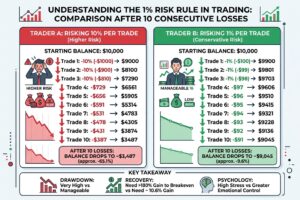
- Risk only 1–2% of total capital per trade
Example:
- Capital: ₹1,00,000
- Risk per trade: ₹1,000–₹2,000
This ensures that no single trade can damage your account.
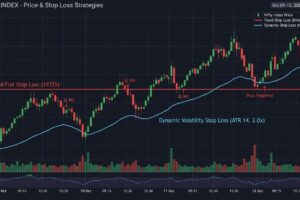
2. Mandatory Stop Loss (Non-Negotiable)
Stop loss is the backbone of capital protection.
Without stop loss:
- Losses grow uncontrollably
- Emotions take over
- Capital is at constant risk
Stop loss must be:
- Decided before entry
- Logical (technical)
- Never moved emotionally

3. Proper Position Sizing
Position size decides how much money you make or lose.
Capital protection rule:
- Position size must be calculated based on stop loss, not emotion
Formula (simple):
Position Size = Risk Amount ÷ Stop Loss Distance
Wrong position sizing destroys capital even with good strategies.
4. Daily Loss Limit
Professionals set a maximum daily loss limit.
Example:
- Daily loss limit: 2–3% of capital
If limit is hit:
- Stop trading for the day
- No revenge trades
- Protect mental and financial capital
This rule saves traders from emotional damage.
5. Avoid Overtrading
More trades ≠ more profit.
Overtrading:
- Increases costs
- Increases emotional pressure
- Increases mistakes
Capital protection requires:
- Quality trades
- Limited number of setups
- Patience
6. Avoid High Leverage
Leverage magnifies both profit and loss.
For beginners:
- High leverage = fast capital destruction
Capital protection strategy prefers:
- Low leverage
- Controlled exposure
- Gradual growth
7. Trade Only Liquid Instruments
Illiquid stocks:
- Have large spreads
- Sudden moves
- Difficult exits
For capital protection:
- Trade liquid stocks
- Avoid penny stocks
- Avoid manipulation-prone instruments
Psychological Capital Protection
Capital protection is not only financial — it is psychological.
8. Emotional Control
Emotions destroy capital faster than bad strategies.
Capital protection requires:
- Accepting losses
- Avoiding revenge trading
- Staying disciplined
When emotions rise, capital is at risk.
9. Trading Journal for Damage Control
A trading journal helps:
- Identify mistakes
- Control repeated errors
- Improve discipline
Ignoring mistakes leads to repeated losses.
Capital Protection vs Profit Chasing
Beginners:
- Chase profits
- Increase position size
- Ignore risk
Professionals:
- Protect capital
- Focus on process
- Let profit come naturally
Capital protection creates profit. Profit does not create capital protection.
Can Capital Protection Limit Profit?
Short-term: Yes
Long-term: No
Limiting risk may slow growth initially, but it:
- Prevents account blow-ups
- Builds consistency
- Increases confidence
Survivors eventually outperform gamblers.
For official investor protection and risk management guidelines, visit the official SEBI website.
Capital Protection During Losing Streaks
Losing streaks are normal.
Capital protection during losing streaks:
- Reduce position size
- Trade less
- Review mistakes
- Pause if needed
Survival during bad phases is success.
Common Beginner Mistakes That Destroy Capital
- No stop loss
- Risking too much per trade
- Overconfidence after few wins
- Emotional trading
- Ignoring daily loss limits
Avoiding these is itself a capital protection strategy.
Capital Protection Is a Mindset
Capital protection is not a rulebook. It is a mindset.
It means:
- Thinking long-term
- Respecting risk
- Accepting uncertainty
- Choosing survival over excitement
Reality Check for Beginners
Markets will always exist.
Opportunities will always come.
But capital lost today may never return.
Final Conclusion
A capital protection strategy is the foundation of successful trading. Without it, no strategy, indicator, or setup can save you.
Protect capital first. Trade small. Stay disciplined. Let experience and consistency grow your account. In trading, survival is success — profit is a by-product.