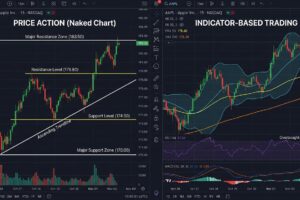
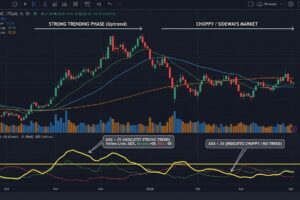
Many beginners learn how to draw support and resistance lines on charts, but they still lose money. This happens because they know the theory but not the support and resistance real use in actual trading.
Support and resistance are not magical lines that guarantee profit. They are decision-making zones that help traders plan entries, exits, stop loss, and risk management. This article explains the real, practical use of support and resistance in trading, without myths or exaggeration.

What Is Support?
Support is a price zone where buying interest is strong enough to stop a fall.
At support:
- Buyers become active
- Selling pressure reduces
- Price often pauses or bounces
Support is not a single line. It is an area, not an exact point.
What Is Resistance?
Resistance is a price zone where selling pressure is strong enough to stop a rise.
At resistance:
- Sellers dominate
- Buying pressure weakens
- Price often reverses or consolidates
Like support, resistance is also a zone, not a fixed price.
Why Support and Resistance Work in Real Markets
Support and resistance work because of:
- Human psychology
- Institutional orders
- Memory of past prices
Traders remember past levels where price reacted strongly. Institutions also place large orders near these levels, which creates repeated reactions.

Support and Resistance Real Use (Not Theory)
The real use of support and resistance is not prediction, but planning.
Let’s break down how professional traders actually use them.
1. Entry Planning Using Support and Resistance
Buying Near Support
Traders look for buying opportunities:
- Near strong support
- After confirmation (price rejection, volume, candle pattern)
Buying near support gives:
- Lower risk
- Better reward potential
Selling Near Resistance
Short trades or profit booking happens:
- Near resistance
- After price shows weakness
This improves probability, not certainty.
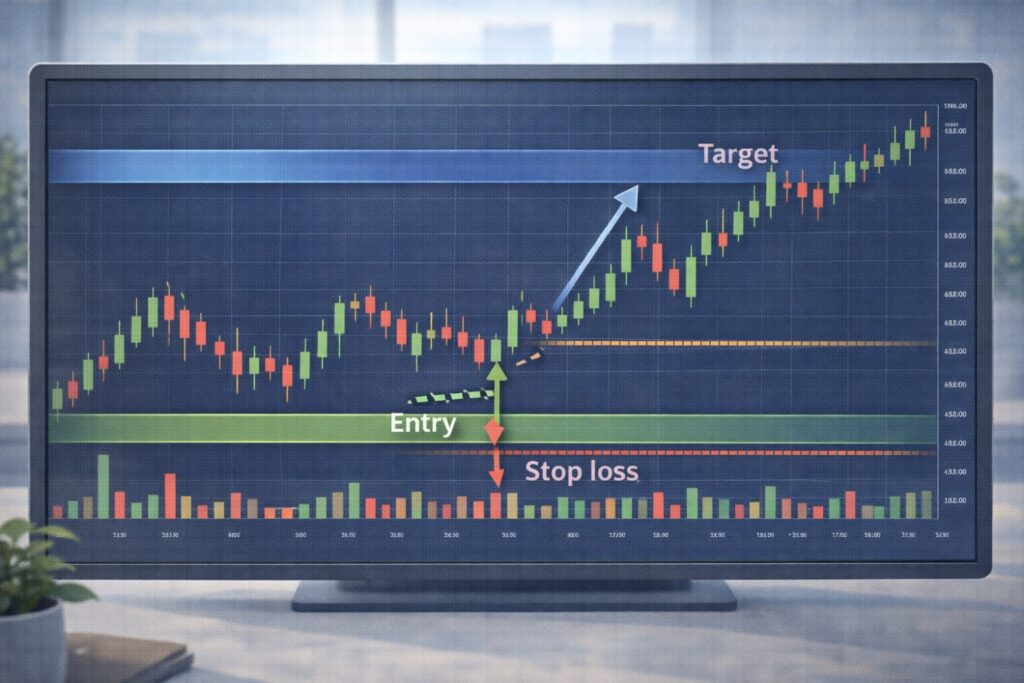
2. Stop Loss Placement (Most Important Real Use)
One of the biggest real uses of support and resistance is stop loss placement.
- Buy trade → stop loss below support
- Sell trade → stop loss above resistance
This makes stop loss:
- Logical
- Technical
- Less emotional
Random stop losses fail more often than technical stop losses.
3. Target Setting Using Support and Resistance
Targets should not be random numbers.
- Buy at support → target near resistance
- Sell at resistance → target near support
This helps maintain a proper risk–reward ratio.
Professional traders do not aim for unlimited targets. They respect levels.
4. Trend Identification Using Support and Resistance
Support and resistance also help identify trends.
- Higher highs + higher supports → uptrend
- Lower lows + lower resistances → downtrend
If supports keep breaking, trend is weak. If resistances keep breaking, trend is strong.
5. Breakout and Breakdown Trading
Support and resistance are also used for:
- Breakout trading
- Breakdown trading
Breakout
- Price breaks resistance with volume
- Old resistance becomes new support
Breakdown
- Price breaks support with volume
- Old support becomes new resistance
The real use is waiting for confirmation, not entering blindly.
For official stock market education and trading guidelines, visit the official NSE website.
6. Support and Resistance in Intraday Trading
In intraday trading, support and resistance help:
- Avoid chasing price
- Identify high-probability zones
- Reduce emotional entries
Intraday traders focus more on:
- Previous day high/low
- VWAP + support/resistance
- Opening range levels
7. Support and Resistance in Swing Trading
Swing traders use:
- Weekly and daily levels
- Major demand and supply zones
They avoid:
- Minor intraday levels
- Noise-based decisions
Higher timeframe levels have more power.
Common Beginner Mistakes With Support and Resistance
Most beginners fail because they:
- Draw too many lines
- Expect exact reversals
- Ignore trend direction
- Trade without confirmation
- Treat levels as guarantees
Support and resistance increase probability, not certainty.
How to Draw Support and Resistance Correctly
Simple rules:
- Use higher timeframes first
- Focus on clear swing highs/lows
- Draw zones, not thin lines
- Keep charts clean
Fewer levels are more powerful than many weak levels.
Can Support and Resistance Be Used Alone?
Support and resistance work best when combined with:
- Price action
- Volume
- Trend direction
- Market context
Using them alone without confirmation reduces accuracy.
Reality Check for Beginners
Support and resistance:
- Do not predict markets
- Do not guarantee profits
- Do not work every time
Their real use is risk control, planning, and discipline.
Final Conclusion
The support and resistance real use lies in planning trades, not predicting exact market moves. They help traders decide where to enter, where to exit, where to place stop loss, and where to book profits.
Beginners who understand the real use of support and resistance trade with more logic and less emotion. Use them as zones, wait for confirmation, and always respect risk management.