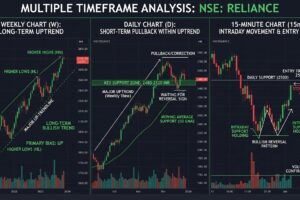
One of the most common questions in the stock market is why new traders lose money even when they use indicators, strategies, and tips from experts. The truth is that most beginners do not lose money because the market is unfair. They lose money because they misunderstand how trading actually works.
Trading is a skill-based profession that requires discipline, patience, and risk control. This article explains the real reasons why new traders face losses, without exaggeration or false promises, so beginners can understand and avoid common mistakes.

1. Lack of Proper Knowledge
The biggest reason why new traders lose money is entering the market without proper education.
Many beginners:
- Do not understand market structure
- Do not know how orders work
- Do not understand risk–reward
- Trade based on random signals
Watching a few videos or following social media tips is not real learning. Trading requires structured education and continuous practice.
2. Unrealistic Expectations
Most beginners expect:
- Daily profits
- Fast income
- Guaranteed returns
This mindset is dangerous. Trading does not offer fixed income. Losses are part of the process. When expectations are unrealistic, emotional decisions increase, leading to losses.
3. Trading Without a Plan
Professional traders always follow a written trading plan. New traders often trade without one.
A trading plan should include:
- Entry rules
- Stop loss rules
- Target rules
- Risk per trade
- Daily loss limit
Trading without a plan is like driving without brakes.
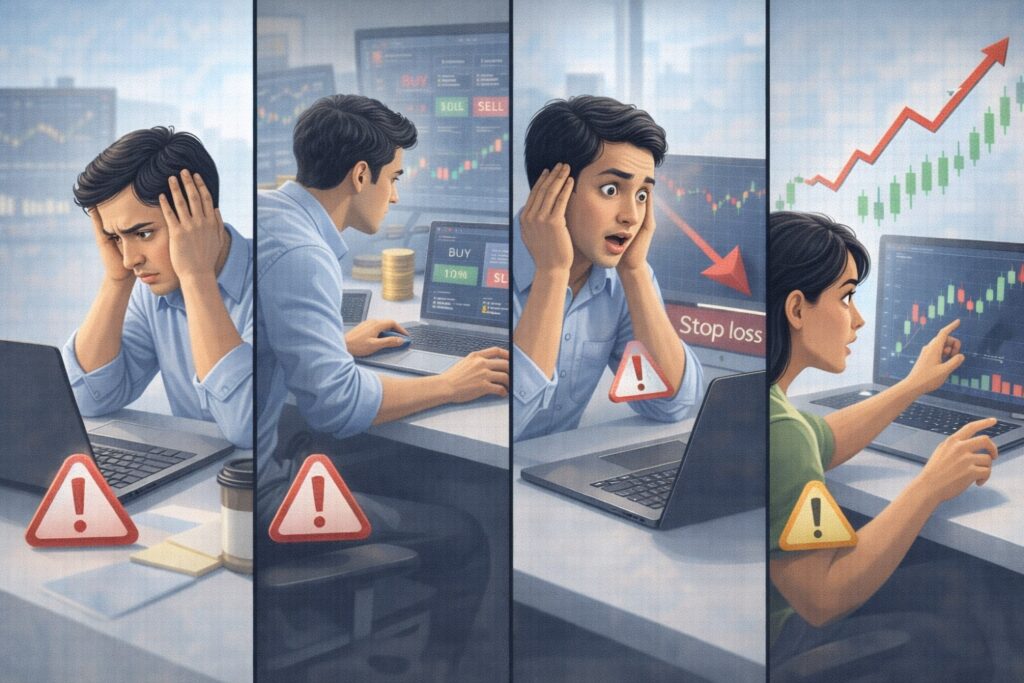
4. Ignoring Stop Loss
Ignoring stop loss is one of the fastest ways to lose money.
New traders often:
- Remove stop loss
- Move stop loss emotionally
- Trade without any stop loss
A small loss is always better than a big loss. Stop loss protects capital and mental peace.
5. Overtrading
Overtrading means taking too many trades without quality setups.
Reasons beginners overtrade:
- Boredom
- Fear of missing out (FOMO)
- Revenge trading after loss
- Greed after profit
More trades do not mean more profit. Overtrading increases brokerage, stress, and losses.
6. Poor Risk Management
Even a good strategy fails without risk management.
Common risk mistakes:
- Risking too much per trade
- Using full capital
- No daily loss limit
Professional traders risk only 1–2% per trade. New traders often risk 10–20%, which wipes accounts quickly.
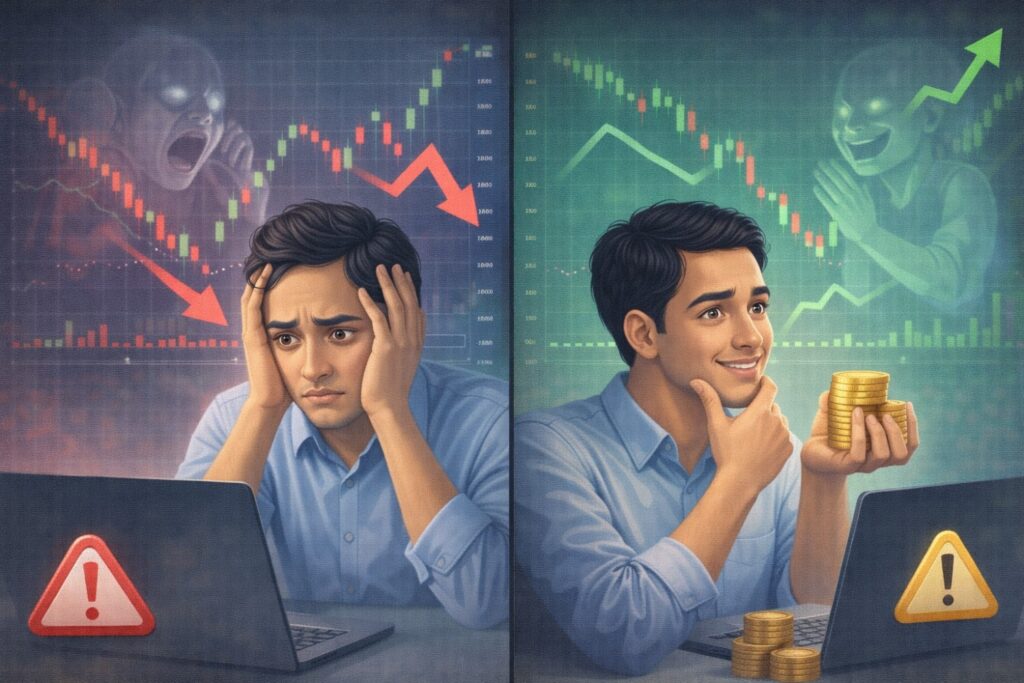
7. Emotional Trading
Trading is more psychological than technical.
New traders struggle with:
- Fear
- Greed
- Hope
- Panic
Emotions cause:
- Early exits
- Late entries
- Holding losing trades
- Cutting winning trades
Without emotional control, no strategy works.
8. Depending on Tips and Telegram Channels
Many beginners depend on:
- Telegram calls
- WhatsApp tips
- Social media screenshots
Problems with tips:
- No risk management
- No accountability
- Often manipulated
- Not suitable for everyone
Successful traders rely on their own analysis, not tips.
9. No Trading Journal
A trading journal helps identify mistakes and improve performance.
New traders:
- Do not record trades
- Do not review mistakes
- Repeat the same errors
Without review, learning stops. Losses continue.
10. Trading With Real Money Too Early
Many beginners start trading with real money before learning properly.
Better approach:
- Learn basics
- Observe market
- Practice with paper trading
- Start with small capital
Early real-money trading increases emotional pressure and losses.
11. Wrong Market Selection
New traders often choose:
- Highly volatile stocks
- Penny stocks
- Illiquid instruments
These stocks move unpredictably and increase risk. Beginners should trade only liquid, stable stocks.
12. Lack of Patience and Discipline
Trading success does not come quickly.
Beginners often:
- Change strategy frequently
- Quit discipline after losses
- Chase profits
Consistency and patience are more important than strategy.
Can New Traders Ever Become Profitable?
Yes, but only when they:
- Accept losses as learning cost
- Focus on process, not profit
- Follow strict rules
- Manage risk properly
- Improve psychology
Most profitable traders were once losing traders.
How New Traders Can Reduce Losses
Key steps:
- Learn before trading
- Use small capital
- Always use stop loss
- Trade less, not more
- Maintain a trading journal
- Focus on risk management
Avoiding losses is more important than making profits.
Reality Check for Beginners
Trading is:
- Not easy money
- Not guaranteed income
- Not suitable for everyone
Trading is a professional skill. Treat it seriously or avoid it.
For official investor education and market guidelines, visit the official SEBI website.
Final Conclusion
Understanding why new traders lose money helps beginners avoid the same mistakes. Losses happen not because trading is impossible, but because beginners rush, ignore rules, and trade emotionally.
If you are new to trading, focus on learning, discipline, and risk control first. Profit will come later. Survival always comes before success.